Every parent wants to give their child the healthiest possible smile. While many people associate orthodontic treatment with the teenage years, some orthodontic concerns are best addressed much earlier while a child's mouth and jaws are still developing.
At Ann Arbor Orthodontics, we carefully evaluate each child's growth to determine whether early orthodontic treatment, also known as Phase I treatment, may help prevent more complicated orthodontic problems in the future.
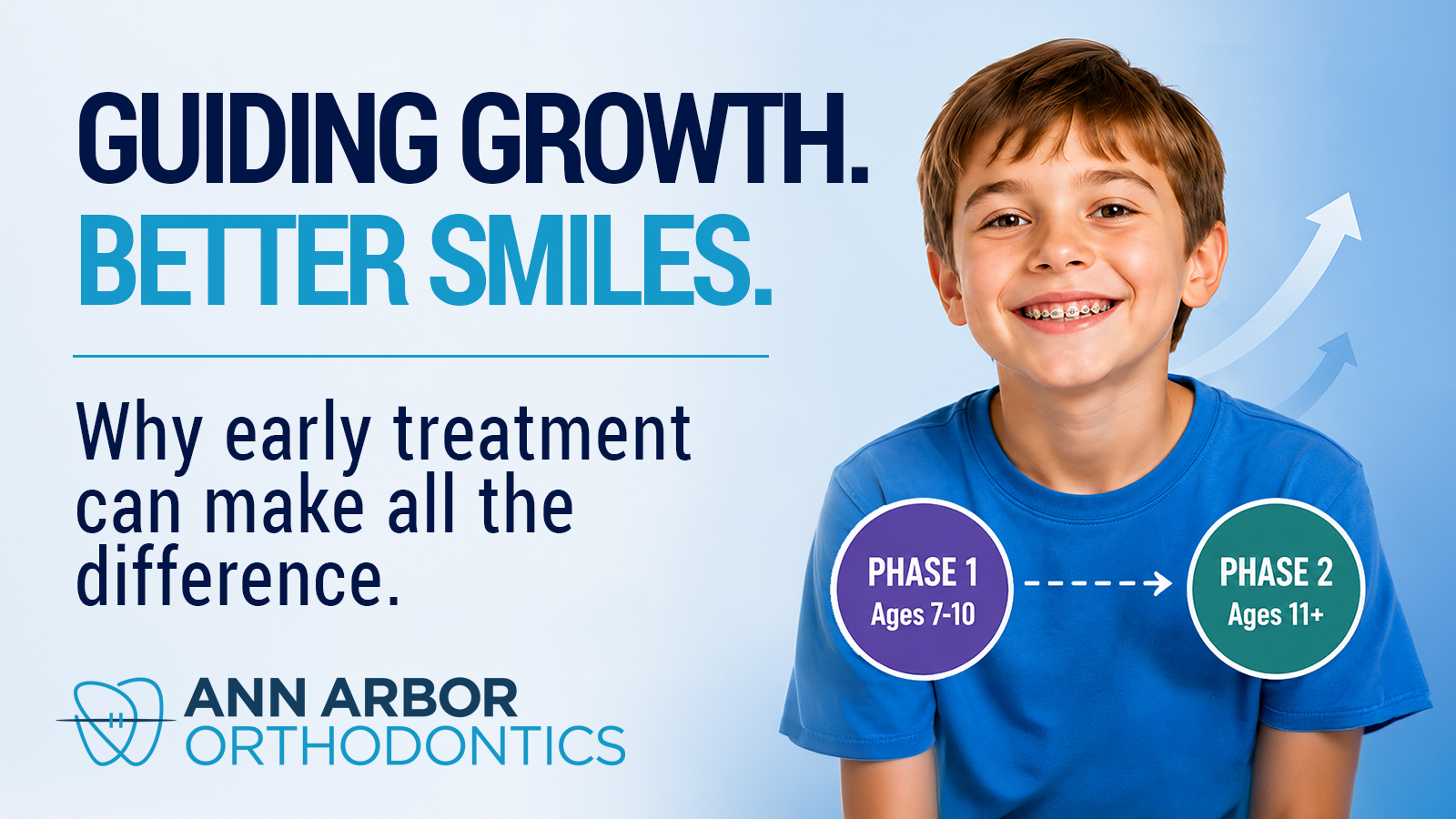
Early orthodontic treatment, often referred to as Phase I treatment, typically begins while a child has a combination of baby teeth and permanent teeth. This usually occurs between the ages of 7 and 10, when jaw growth can still be guided and certain bite problems are easier to correct.
It's important to understand that not every child needs early treatment. An orthodontic evaluation simply helps determine whether treatment should begin now or if your child's smile can continue developing naturally for a little longer.
Phase I treatment isn't designed to create a perfect smile at an early age. Instead, it helps establish a healthier foundation for the permanent teeth and jaw as your child continues to grow.
Depending on your child's orthodontic needs, early treatment may help:
By addressing these concerns at the right stage of development, treatment later in life is often more straightforward and predictable.
Following Phase I treatment, most children enter a monitoring period while their remaining permanent teeth continue to erupt. During this time, we'll schedule occasional checkups to make sure everything is developing as expected.
Some children will later benefit from Phase II Treatment, which focuses on the final alignment of the teeth and bite using braces or Invisalign. Others may require only limited treatment because many concerns were already addressed during Phase I.
Not necessarily. Many children never require Phase I treatment and begin orthodontic care only after most or all of their permanent teeth have erupted.
Others benefit greatly from early intervention because of jaw growth concerns, bite problems, or crowding that are easier to correct while they're still growing. Every recommendation is based on your child's individual needs—not a predetermined treatment plan.
The American Association of Orthodontists recommends scheduling your child's first orthodontic evaluation around age 7. This doesn't mean treatment will begin right away. Instead, it allows your orthodontist to identify potential concerns early and determine the ideal time to begin treatment, if it's needed.
For many families, an early evaluation simply provides reassurance that their child's smile is developing normally.
No two children develop exactly alike, which is why every orthodontic treatment plan should be personalized. At Ann Arbor Orthodontics, we carefully evaluate your child's bite, jaw development, and long-term oral health before making any treatment recommendations.
To learn more about Phase I Treatment, explore how Phase II Treatment completes orthodontic care, or read about what happens if early orthodontic treatment is missed, we're here to help you make informed decisions about your child's smile.
