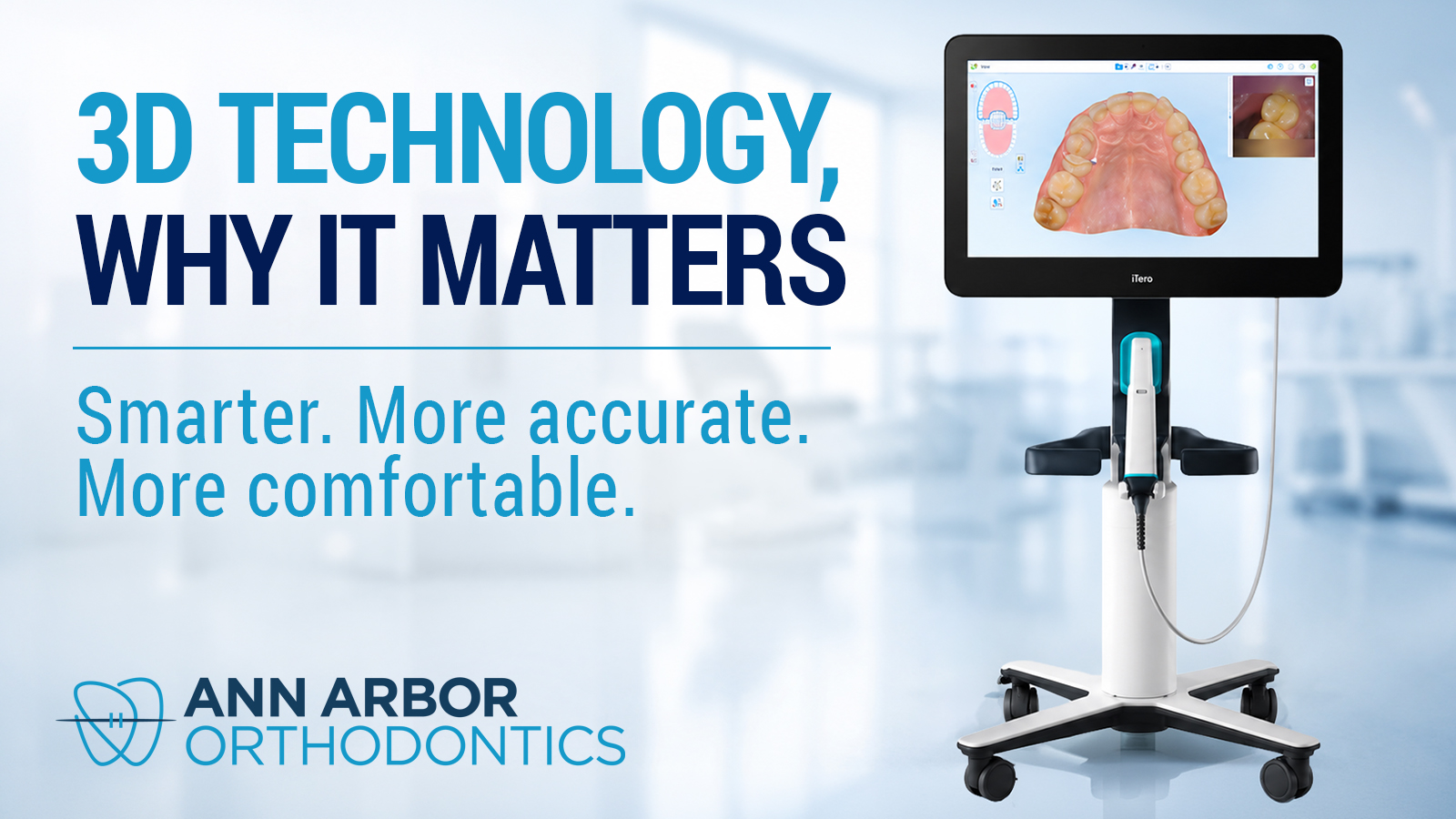
Orthodontic technology has advanced significantly over the past several years, and one of the most exciting improvements is the use of 3D digital scanning. From your initial consultation to the final stages of treatment, this technology allows orthodontists to evaluate your smile with remarkable accuracy while making the entire process more comfortable for patients.
At Ann Arbor Orthodontics, 3D digital technology helps us create personalized treatment plans while providing a faster, easier, and more enjoyable experience for children, teens, and adults.
If you've ever had traditional dental impressions taken, you probably remember the trays filled with impression material. Although they worked well, they weren't always the most comfortable part of an orthodontic visit.
Today's digital intraoral scanners capture thousands of detailed images in just a few minutes to create an incredibly accurate 3D model of your teeth. The process is clean, comfortable, and often eliminates the need for traditional impressions altogether.
No two smiles are exactly alike, so orthodontic treatment should never be one-size-fits-all. Digital 3D models allow your orthodontist to carefully evaluate tooth alignment, spacing, bite relationships, and jaw development before treatment even begins.
With this level of detail, treatment planning becomes more precise, helping create a customized plan designed specifically for your smile and your long-term oral health.
Whether your treatment includes traditional braces or Invisalign, 3D digital scans play an important role. They help your orthodontist plan tooth movement before treatment begins and monitor your progress throughout every stage of care.
For Invisalign patients, these digital scans are also used to design the custom aligners that gradually move your teeth into their ideal positions.
Advanced technology doesn't just improve treatment planning—it also improves the patient experience. Digital scans are quick, comfortable, and appear instantly on a computer screen, allowing patients and parents to clearly see what the orthodontist sees.
Viewing a detailed 3D model of your own smile makes it much easier to understand treatment recommendations and feel confident about the next steps.
While technology has transformed orthodontics, successful treatment still depends on careful diagnosis, experience, and personalized care. Digital tools simply give your orthodontist even better information to create the best possible treatment plan.
At Ann Arbor Orthodontics, we combine advanced 3D scanning technology with years of orthodontic experience to deliver care that's accurate, efficient, and customized for every patient.
If you're considering orthodontic treatment, learn more about our 3D Digital Scanning Technology. You can also explore our Invisalign page or learn about our Comprehensive Orthodontic Treatment options to see how digital technology supports every step of your smile journey.
