It's bedtime, the lights are low, and there it is again: your child's thumb, tucked right where it always goes. For a toddler, that's a familiar and harmless scene. For a child heading into kindergarten or first grade, many parents start to wonder whether it's time to step in, and how.
At Ann Arbor Orthodontics, we see thumb sucking as a normal habit with a timeline. Knowing where your child is on that timeline, and what signs to watch for, makes it much easier to decide whether to simply wait, gently encourage a change, or have the teeth checked.
Yes, for babies and young children it's one of the most natural ways to self-soothe. Sucking helps little ones relax, fall asleep, and feel secure. The American Association of Orthodontists' guidance on thumb and pacifier habits notes that many children give up these habits on their own between ages 2 and 4, so there's usually no reason to worry before then.
The picture starts to change after about age 3 or 4. Pediatric dental guidelines suggest checking in with your child's dentist if a sucking habit is still strong past age 3, and the stakes rise further around age 6, when the permanent front teeth begin to come in. By age 7, an orthodontic check-up can show whether the habit has left a lasting mark.
Age isn't the only factor. A child who rests a thumb in their mouth for a few minutes at bedtime is in a very different situation than one who sucks hard for hours every day and night. How often, how hard, and for how many years all add up.
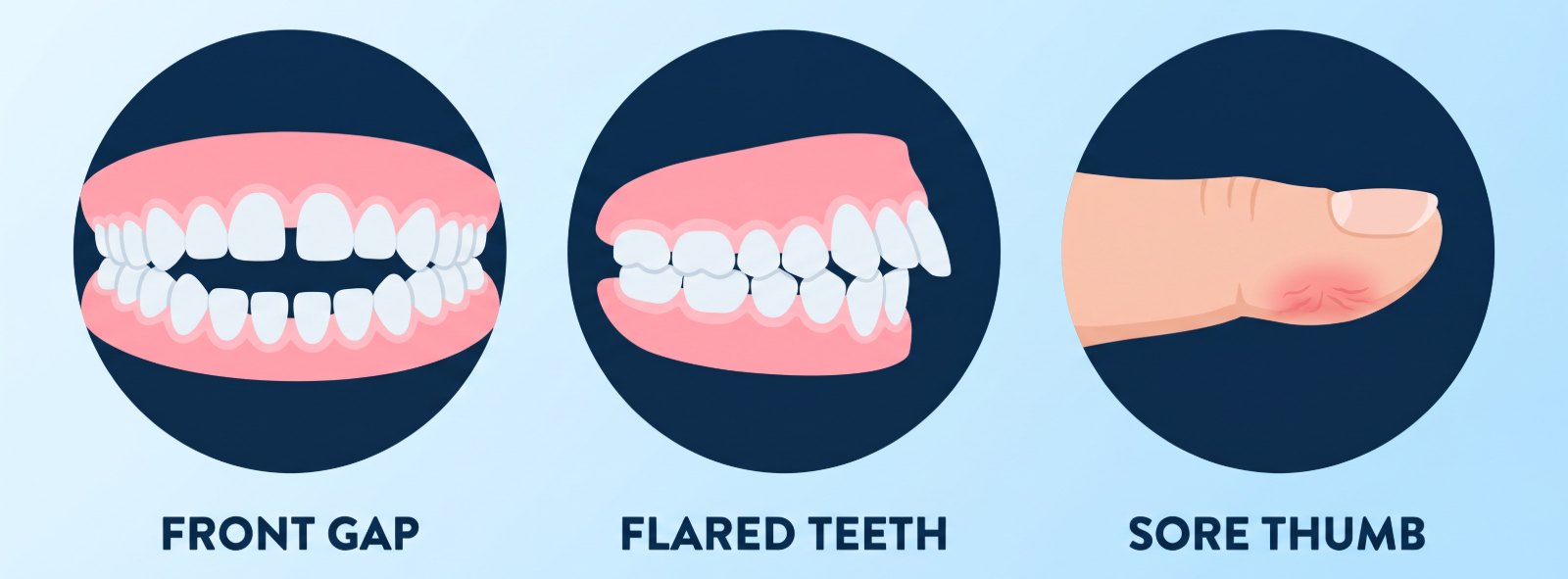
You don't need an X-ray to spot some of the early changes. Watch for:
Our Do I Need Braces? page explains open bites and other bite problems we often see alongside thumb sucking and tongue thrusting.
Often, yes, as long as the habit stops. Research pooling several studies on open bite self-correction found that when children gave up a sucking habit, their open bites closed on their own in 50 to 100 percent of cases, even in some children older than 4. When the habit continued, that kind of improvement was rare. Changes in jaw width, such as a crossbite from a narrow upper jaw, are less likely to resolve without help.

Children rarely stop because they're told to. They stop when they're ready and feel supported. A few strategies families find helpful:

If the habit continues or you've noticed any of the signs above, an evaluation is a good next step. Thumb sucking is one of the reasons we recommend early check-ups, as we explain on our What Age Should My Child See an Orthodontist? page. For children who want to stop but can't, a small fixed habit appliance behind the upper teeth acts as a gentle, constant reminder. When the habit has already affected jaw growth, Phase 1 Treatment can help guide development while your child is still growing.
Not sure whether your child's habit is affecting their smile? Schedule a complimentary orthodontic evaluation with our Ann Arbor team, and we'll help you decide what, if anything, needs to happen next.
